
Introduction
Kuala Lumpur is one of Southeast Asia's most underrated capitals — a city where gleaming skyscrapers rise beside colonial shophouses, and where Malay, Chinese, and Indian cultures have been cooking together for generations. It's affordable, easy to navigate, and endlessly delicious.
Places to Visit
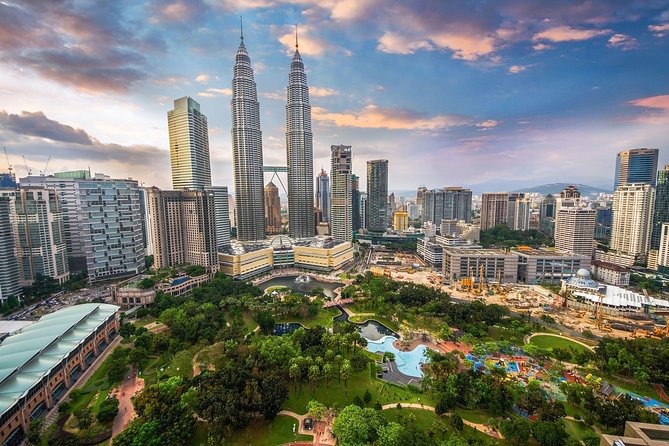
Petronas Twin Towers — The defining symbol of modern Malaysia. At 452 metres tall, these twin giants dominate the skyline. Book ahead to visit the Skybridge on floor 41 or the observation deck on floor 86 for sweeping views across the city.
Batu Caves — A short train ride north of the city, this sacred Hindu temple complex sits inside a dramatic limestone hill. Climb 272 colourful steps past the towering golden statue of Lord Murugan to reach the cave shrine above.
Central Market (Pasar Seni) — A beautifully preserved Art Deco building in the heart of the city, packed with stalls selling batik fabric, local handicrafts, silver jewellery, and cultural souvenirs. Great for gifts and browsing.
Merdeka Square — The birthplace of Malaysian independence, this open square is flanked by stunning colonial-era buildings including the Royal Selangor Club and the Sultan Abdul Samad Building. One of the most photogenic spots in the city.
KLCC Park — The green oasis sitting directly beneath the Petronas Towers. Perfect for a morning jog, an evening stroll, or watching the nightly fountain show. Entry is free.
Bukit Bintang — KL's entertainment and shopping epicentre. By day it's a maze of malls and street food; by night it transforms into one of the city's most vibrant dining and nightlife districts. Jalan Alor, tucked just behind it, is unmissable.
Chinatown (Petaling Street) — A sensory overload in the best way — colourful lanterns, bustling market stalls, and some of the cheapest and most authentic street food in the city.
Foods to Try
Nasi Lemak — Malaysia's national dish and arguably its greatest culinary export. Fragrant rice cooked in coconut milk, served with sambal chilli, crispy anchovies, roasted peanuts, cucumber, and a boiled or fried egg. Best eaten in the morning, wrapped in banana leaf at a hawker stall.
Char Kway Teow — Flat rice noodles stir-fried over screaming-hot fire with prawns, cockles, Chinese sausage, egg, and bean sprouts. The hallmark of a great plate is "wok hei" — that smoky, slightly charred breath of the wok.
Bak Kut Teh — Pork ribs simmered low and slow in a deep herbal broth fragrant with star anise, garlic, and pepper. A beloved Chinese-Malaysian breakfast dish, best paired with fried dough sticks (youtiao) and strong Chinese tea.
Rojak — A distinctly Malaysian salad that mixes fruit, vegetables, and fried dough in a thick, pungent shrimp paste sauce topped with crushed peanuts. Sweet, sour, spicy, and funky all at once.
Roti Canai — Flaky, buttery flatbread cooked on a griddle and served with dhal curry or fish curry for dipping. A staple of Indian-Muslim mamak stalls, which stay open around the clock.
Cendol — Shaved ice loaded with green pandan jelly, rich coconut milk, and dark palm sugar syrup. One of the most refreshing things you can eat in a city that rarely drops below 30°C.
Where to eat: Head to Jalan Alor for a classic KL street food night — rows of open-air stalls stretching an entire block. Petaling Street in Chinatown is equally good for budget bites and local atmosphere.
Getting Around
MRT / LRT — KL has an extensive and well-connected rail network that covers most major attractions and neighbourhoods. It's fast, air-conditioned, and very affordable. Get a Touch 'n Go card at any station for convenient top-ups across all lines.
Grab — Southeast Asia's dominant ride-hailing app. Far more reliable than flagging a taxi and prices are fixed upfront. Download it before you arrive — you'll use it constantly.
GO KL City Bus — A completely free bus service that loops through the city centre, connecting key hubs like KLCC, Bukit Bintang, Chinatown, and KL Sentral. Ideal for short hops during the day.
KL Monorail — Runs through the Golden Triangle district, handy for getting between Bukit Bintang, Chow Kit, and KL Sentral without needing a Grab.
KLIA Ekspres — The express train linking KL International Airport to KL Sentral in just 28 minutes. Skip the traffic entirely — it's worth every ringgit.
Elevated walkways — Many of KL's major malls and office towers are connected by covered overhead walkways. Learning these connections lets you move long distances in the city centre without ever stepping into the heat.
Insider tip: Set up the Touch 'n Go eWallet on your phone. It works on trains, buses, highway tolls, and increasingly at hawker stalls and small shops. It's the single most useful thing you can do to make getting around KL seamless.
Best Time to Visit
May to July is generally the driest period, with lower humidity and less rainfall — ideal if you're planning a lot of outdoor sightseeing or day trips.
November to January brings the wetter northeast monsoon season with heavy afternoon showers, but also a festive atmosphere, especially around Christmas and Chinese New Year preparations. Hotel rates tend to be lower outside the peak school holiday periods.
KL is worth visiting year-round. Rain, when it comes, usually passes quickly — and it's the perfect excuse to duck into one of the city's excellent air-conditioned malls.
Average daily budget: RM 150–300 (roughly USD 30–65) covers comfortable accommodation, hawker meals, and public transport with room to spare.
